
💡 Notice: The project 'Vitabase' mentioned in this post has undergone a complete rebranding due to a domain dispute. It is now operating under the new name 'Elenixia'.
👉 Read the story behind finding our 0-SERP legendary domain →Here’s the thing: AI will always let you down.
That’s not cynicism, it’s just a fact I learned the hard way last week. You spend months building something, you finally get a trickle of traffic, and then… it breaks. The OpenAI API just throws a 502 Bad Gateway error. It chokes. At the worst possible moment, of course. Gemini has its own version of this, just shutting down randomly when you need it most. And in those seconds of dead air, you can almost hear potential customers closing the tab. It’s a gut-wrenching feeling for a founder who’s fighting for every single user.
One Dies, Another Rises
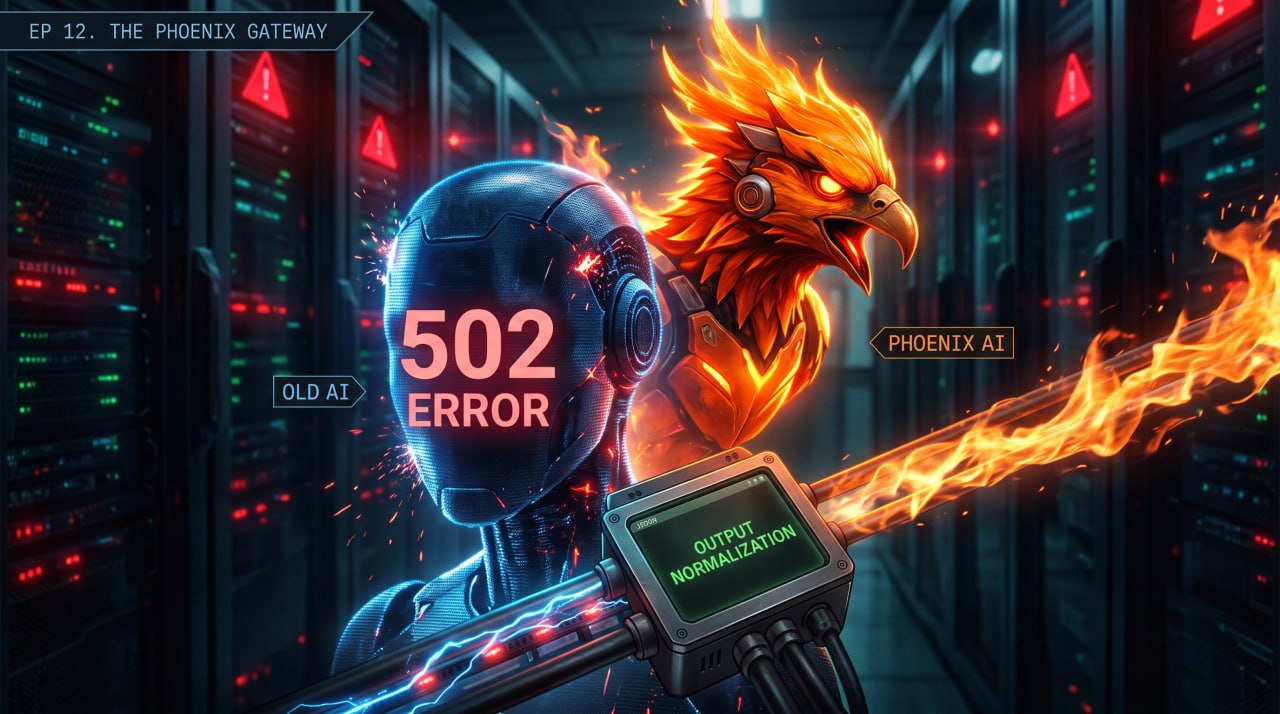
AI is not perfect. It gets tired. It hallucinates. It just… stops. So I stopped trusting it. I decided to build a system that assumes the AI *will* fail. The solution was a brutal, two-headed beast I call the Phoenix Fallback. It’s a simple concept. My system has a primary AI, our star player. But on the bench, warmed up and ready, is a second AI from a totally different provider.
The moment the main AI throws an error or takes too long to respond, the system doesn’t wait. It doesn’t ask for permission. It instantly reroutes the entire job to the backup. One engine dies, the other one roars to life. The user on the front end never even knows a crisis just happened. It’s not about having the ‘best’ AI. It’s about having a system with a goddamn immortal heart transplanted into its backend.
![[Vitabase #12] The Phoenix Gateway: My Defense Against Dying AIs](https://kevinsarchive.com/wp-content/uploads/2026/07/photo_20260730_144301.jpg)
The Y-Merge: Forcing Two Brains Into One Format
But a failover creates another nightmare. OpenAI and Gemini speak different languages. Their output formats are totally different. If you just hot-swap them, the raw data hits my WordPress backend and everything shatters. 400 errors everywhere. It’s like plugging a European appliance into an American socket. Sparks fly.
That’s why I built the Y-Merge Parser. It’s a single, merciless node that sits after the AIs. It doesn’t care which AI sent the data. It takes the output from either one, strips it down, and forces it into one clean, standardized format before passing it along. This little piece of architecture is the silent hero. It guarantees that no matter how chaotic things get with the AI models, the rest of my system only ever sees perfect, predictable data. No more random front-end errors. Just control.
The Automated Bouncer
This obsession with control extends to user access, too. As an early founder, you can’t afford to be naive. There are people who will try to game your system—sign up, use the service, and then immediately cancel or issue a chargeback to get it for free. You can’t fight them one by one. You have to build a wall.
So I hooked up my payment processor’s webhooks directly to n8n. The second a user’s subscription is canceled or refunded, a signal fires. n8n catches it and instantly runs a command to my backend. Their VIP dashboard access? Revoked. Immediately. No emails, no manual process, no grace period. It’s a cold, unmanned defense system. It has to be. I’m building a business, not a charity, and this Titanium Defense Line makes sure the gate is protected while I sleep.

“Don’t trust your AI; build a cage for it.”