
💡 Notice: The project 'Vitabase' mentioned in this post has undergone a complete rebranding due to a domain dispute. It is now operating under the new name 'Elenixia'.
👉 Read the story behind finding our 0-SERP legendary domain →The city sleeps, but on my screen, a complex architecture is taking shape—a decision point that will define everything for my new venture, Vitabase.
Building a personalized AI nutrition platform comes down to one critical function: how do we take a user’s personal data and turn it into recommendations they can actually trust? The path you choose here isn’t just a technical detail; it’s the foundation of your entire business. I saw two distinct roads ahead, one easy and one hard. I’m taking the hard road.
The Siren Song of Instant AI
The first option was tempting. The path of least resistance. I could simply wire our system directly into a large language model like Gemini or GPT. The knowledge is already there, baked into trillions of data points. On paper, it’s a plug-and-play solution that gets us to market fast. But here’s the raw reality: that path is a minefield. The two deal-breakers are latency and hallucinations.
A user asking for health advice can’t wait for a digital stutter while the AI thinks. More importantly, we can’t afford even a 0.01% chance of the AI inventing a “fact.” In the world of health and wellness, an AI hallucination isn’t a funny quirk; it’s a catastrophic failure of trust. Solutions exist to mitigate these issues, sure, but they feel like patches on a fundamentally flawed approach. For Vitabase, this plan is out.
![[Vitabase #2] The Zero-Latency Bet: Why I'm Pre-Building Our AI's Brain](https://kevinsarchive.com/wp-content/uploads/2026/07/photo_20260709_215216.jpg)
Forging a Database of Truth
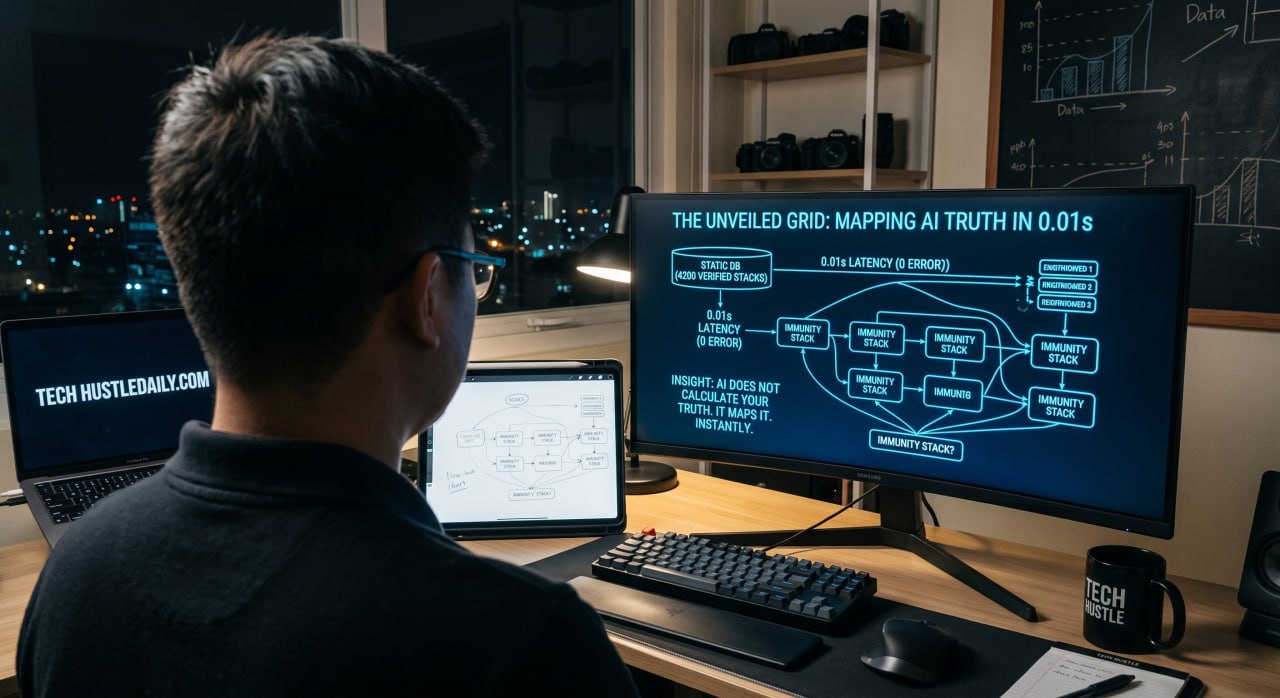
The second path is the one lit by my monitor late into the night. It’s slower, more deliberate, and requires a heavy upfront lift. We’re going to use an automation framework like n8n to pre-build our own curated database. The plan is to start by accumulating and structuring around 3,000 verified data points—clinical studies, nutritional information, and expert-vetted correlations. From there, we’ll implement a disciplined schedule of weekly updates and periodic data cleaning.
This isn’t just a database; it’s a controlled reality for our AI to operate within. By doing the brutal work upfront, we engineer the system to our own standards. The outcome? Zero-second latency and a near-zero probability of error. When a user asks a question, the answer is instant and drawn from a well of information we built and verified ourselves. No lag, no guesswork.
![[Vitabase #2] The Zero-Latency Bet: Why I'm Pre-Building Our AI's Brain](https://kevinsarchive.com/wp-content/uploads/2026/07/photo_20260709_215301.jpg)
The Upfront Cost of Confidence
Of course, this approach isn’t free. The initial token cost to process and structure all this data will be significant. It’s a cash burn that founders are usually desperate to avoid. But I see it differently. It’s not an expense; it’s an investment in the single most important asset this company will ever have: user trust. We’re paying a one-time toll for a system built on certainty, ensuring that every recommendation we make is fast, accurate, and reliable. That’s a price I’m willing to pay.

“True automation isn’t about connecting APIs; it’s about architecting a system of trust that can operate without constant intervention.”