
The hardest part of scaling a digital empire isn’t writing the code or managing the servers; it is the brutal realization that a faceless algorithm holds the absolute keys to your financial survival.
Three weeks have passed since the soft-ban anomaly ripped through my automated YouTube network. When the dust finally settled, the reality of the situation became clear, and it required cold, calculated action. Out of the original test batch, 6 channels evolved into absolute heroes, catching the algorithmic updraft and pulling in traction that exceeded all my baseline projections. Another 7 channels are currently holding their ground, surviving the purge and generating steady, albeit average, metrics.
But then there were the bottom feeders. 5 channels completely flatlined.
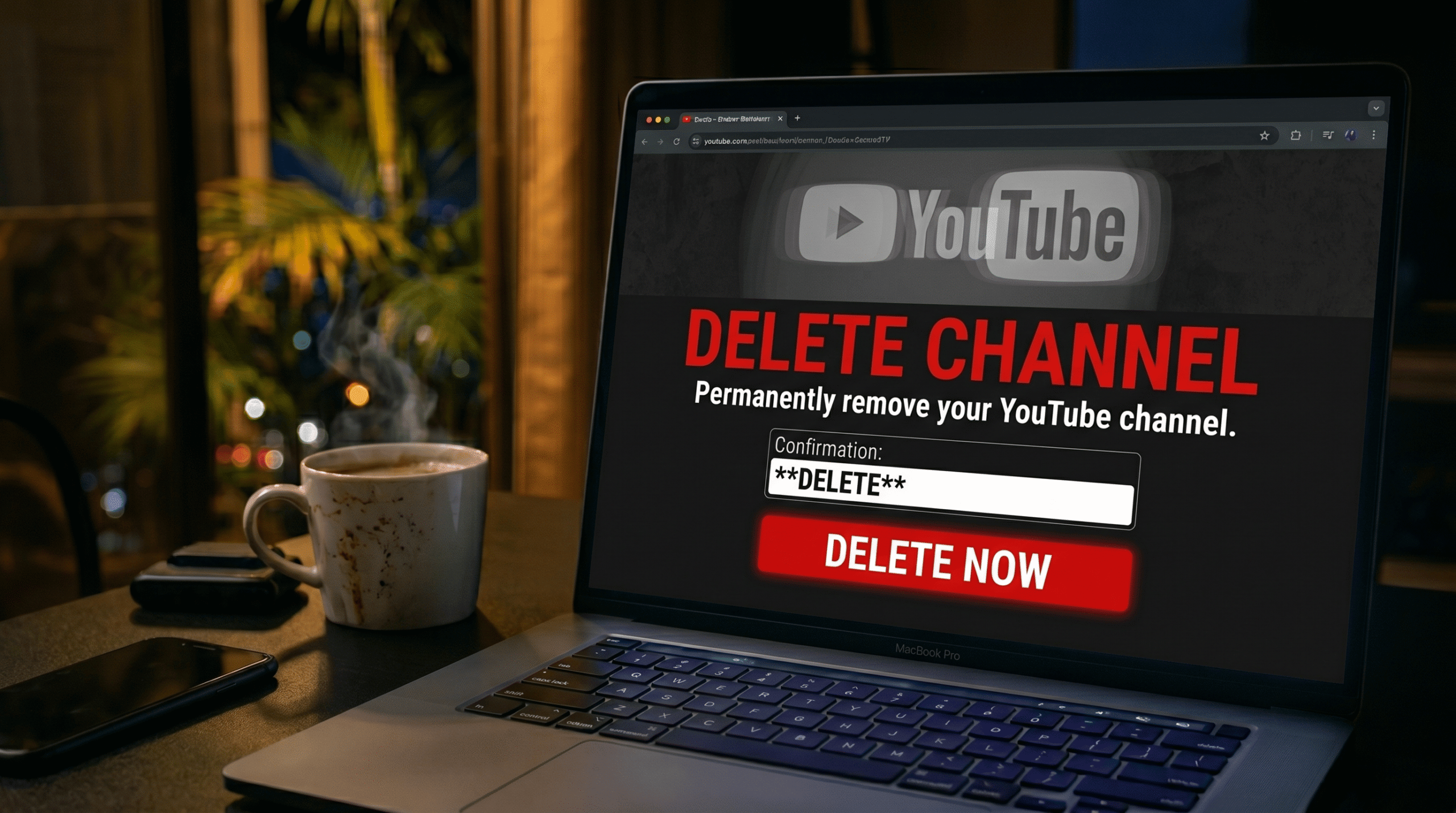
I watched their analytics closely for three grueling weeks. I analyzed the impressions, tweaked the metadata, and waited for a heartbeat. There was nothing but the occasional twitch of a random view. They were caught in the digital void, permanently shadowbanned. As a systems architect, you cannot afford to be sentimental about dead weight. Last night, I logged into each of those 5 accounts, bypassed the warning prompts, and permanently hit the delete channel button. I am currently aging fresh accounts to replace them, but the remaining active channels in the network are now under a strict two-week observation period. They will either rise to the occasion, or they will face the exact same digital guillotine.
*There is no room for sentimentality in automation. If a channel flatlines, you cut the cord and reboot the system.*
The Algorithm Dictatorship
During this three-week triage process, a profound sense of frustration began to overshadow the daily operations. The core issue wasn’t the quality of the videos my factory was producing. In fact, after comparing my outputs with top-tier competitors, I knew my rendering quality was objectively superior. The true source of my frustration was the algorithm dictatorship itself.
When you operate as a B2C content creator, you are not a business owner; you are a tenant farming on Google’s land. You can engineer the most psychologically compelling hook, render it in stunning 4K, and perfectly time the audio retention spikes. But if the algorithm decides to arbitrarily ignore your specific channel bucket that day, your ROI drops to zero.
Two identical videos, produced by the exact same render engine, can experience wildly different fates based purely on algorithmic luck. This lack of control is infuriating. I am a systems engineer. I build predictable pipelines. Leaving my revenue entirely to the chaotic whims of a black-box recommendation system felt like an insult to the architecture I had spent months building.
Forging the Ultimate Arsenal
People had been reaching out to me via email and LinkedIn, quietly asking if I would sell them the automated Shorts my factory was producing. The success of my 6 hero channels proved that my core content templates were highly lethal when given a fair chance by the algorithm. Up until now, I had kept the doors closed. I wanted to perfect the machinery before I ever thought about distribution.
But the recent ban wave forced me to upgrade my defenses entirely.
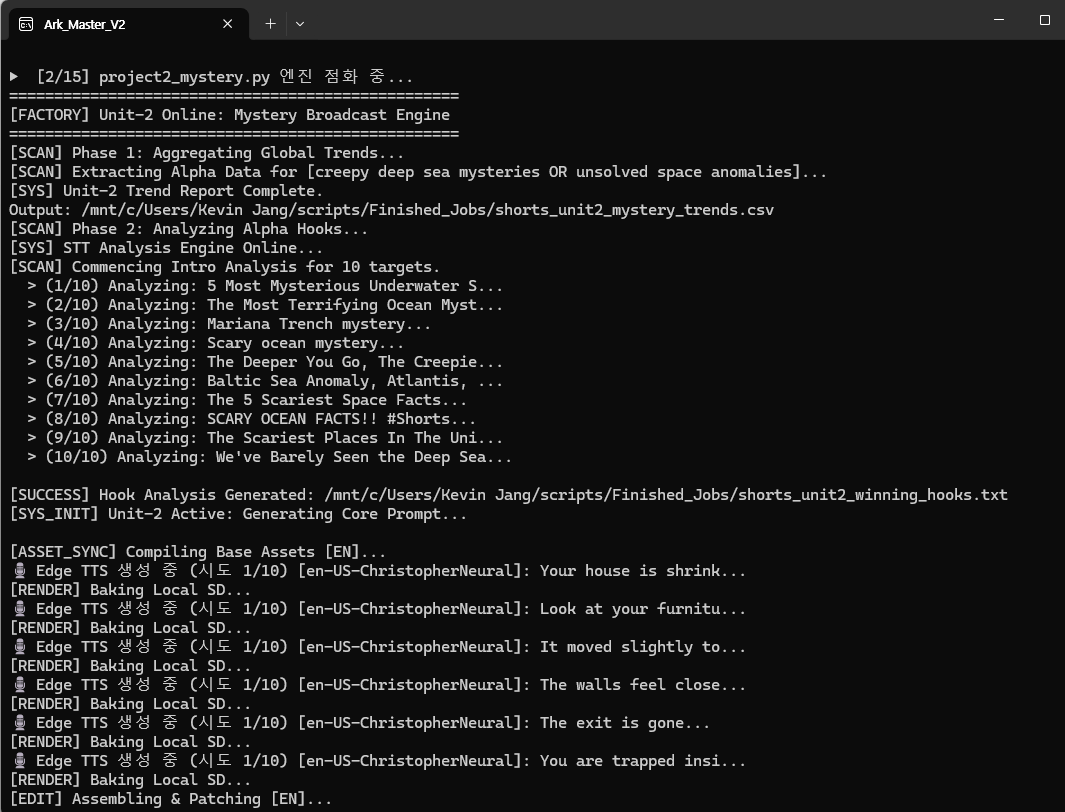
*Inside the core terminal. Compiling the intelligence and rendering the outputs without relying on fragile third-party web tools.*
I completely overhauled the core engine. Previously, I relied on a 4-layer defense system to bypass YouTube’s duplicate content filters. Today, my factory operates on a proprietary 5-Layer Stealth Matrix.
This isn’t just about tweaking contrast. The system forcefully injects variable VHS scratch particles at a 1.5% opacity to physically alter the pixel hash. It applies micro-jittering to the Y-axis of subtitles, dynamically scrambles the audio fingerprint with deep-sea frequencies, and amputates randomized milliseconds from the black-tail outro. Even if my factory pumps out the exact same script twice, the algorithm reads two completely distinct, untraceable digital files.
Furthermore, my local servers now house 40 distinct, fully automated premium templates. From True Crime to Stoic Philosophy and Matrix Glitches, the entire production line is decentralized, scalable, and fully autonomous.
*The stealth matrix completely obfuscates the digital fingerprint, making algorithmic detection nearly impossible.*

The Pivot: Selling Shovels in a Gold Rush
This brings me to a massive operational pivot. Looking at my terminal, pumping out hundreds of algorithmically immune videos an hour, I asked myself a critical question.
Why am I fighting a trench war against the YouTube algorithm for ad revenue, when I hold the exact weapons that every other creator is desperately trying to build?
During the great Gold Rush, the people who actually built generational wealth were not the miners digging in the dirt, hoping to get lucky. The real money was made by the entrepreneurs selling the indestructible shovels and pickaxes to the miners.
I already possess the 40 templates. I have engineered the 5-Layer Stealth Matrix that actively defeats the Reused Content penalty. Transforming my role from a stressed-out “Shorts Factory Owner” into the ultimate “Systems Provider” is the most logical evolution of this business.
I am no longer interested in playing YouTube’s lottery. I am stepping out of the casino, and I am going to start selling the card-counting machines. The era of manual, fragile channel automation is over. A new architecture is coming, and it is going to change how agencies scale their empires forever. Stay tuned.
What is your ultimate goal with automation? Are you trying to build a few passive channels, or are you aiming to scale an entire production agency? Let me know below!

“The pivot from B2C creator to B2B architect is the ultimate cheat code. Stop fighting the algorithm and start charging the people who do. The empire is officially shifting gears.”