
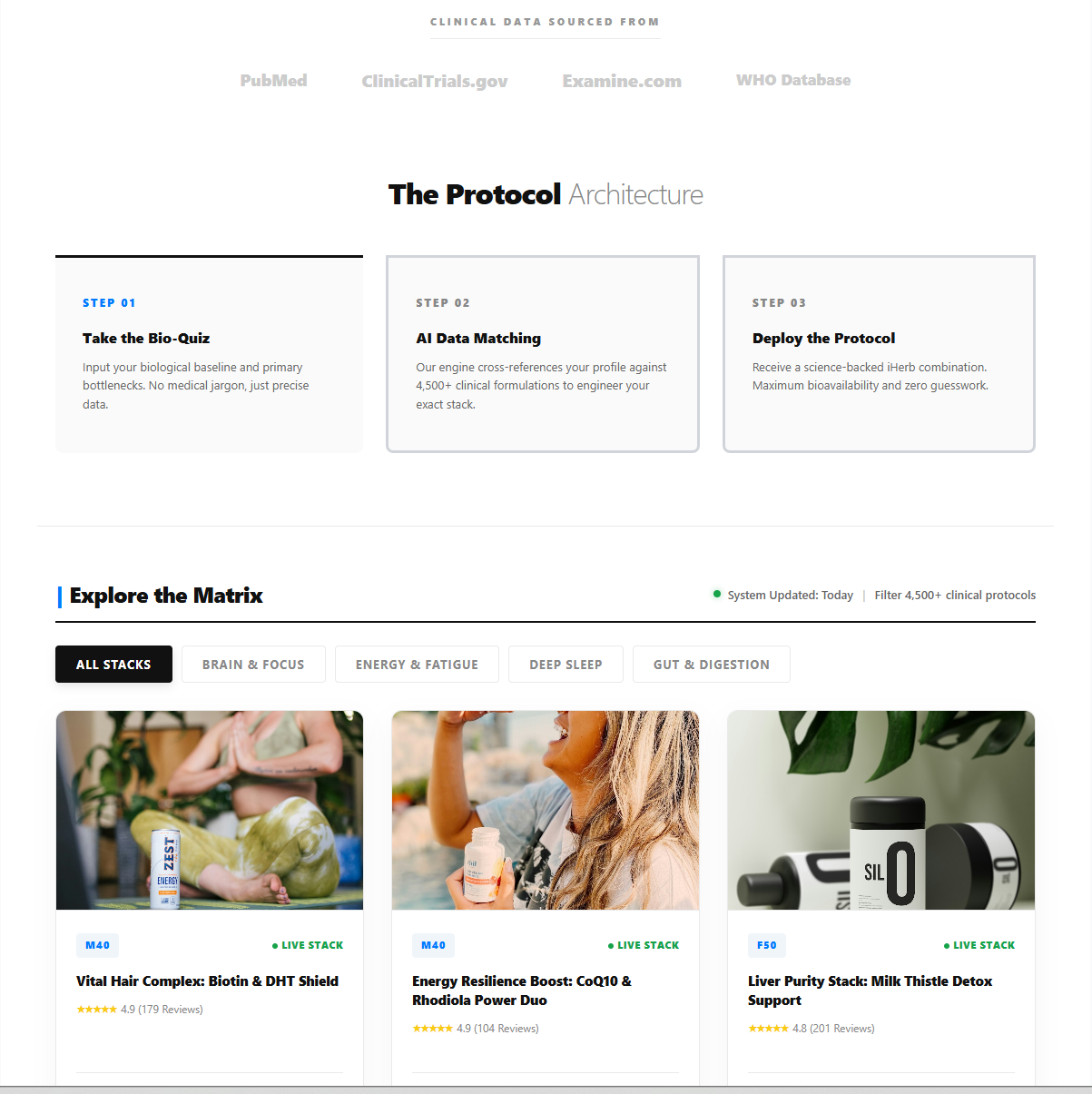
💡 Notice: The project 'Vitabase' mentioned in this post has undergone a complete rebranding due to a domain dispute. It is now operating under the new name 'Elenixia'.
👉 Read the story behind finding our 0-SERP legendary domain →In a world obsessed with sub-second load times, I just spent a week deliberately making my app slower—and it’s going to make me more money.
![[Vitabase #5] The 60-Second Dopamine Heist: Turning Server Lag into Perceived Value](https://kevinsarchive.com/wp-content/uploads/2026/07/photo_20260710_011601.jpg)
The Illusion of Effort
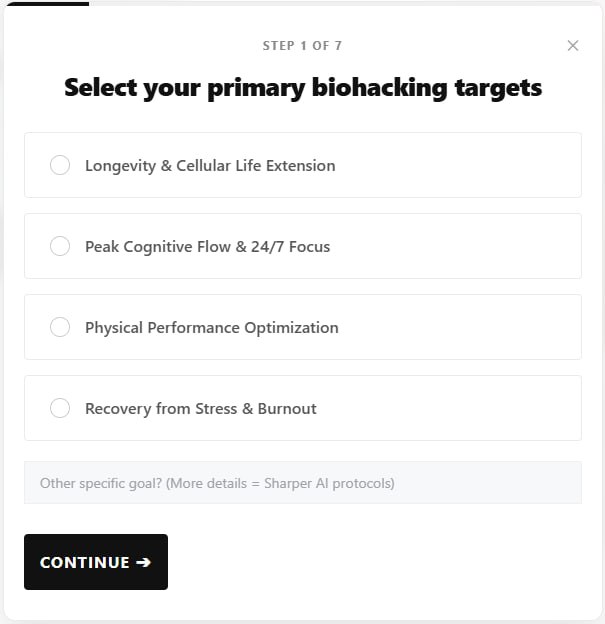
The new Vitabase quiz is live. I scrapped the usual boring entry points like age and gender. Who cares? They’re low-commitment, low-value questions. Instead, the very first thing a user sees is “STEP 1 OF 7: Select your primary biohacking targets.” They’re immediately forced to define their goal—longevity, cognitive enhancement, physical optimization. This isn’t a survey; it’s the start of a mission.
But here’s the first sleight of hand. When they submit this form, a process that takes my server about 0.5 seconds, I force a 4-second loading spinner that reads “Encrypting Data…” This is the Labor Illusion. Users don’t trust things that are too easy or too fast. That brief, artificial pause creates a perception of security and significance. It telegraphs that their input is valuable and that the system is already working hard to protect it.
Killing the Timeout, Staging the Show
The real beast is the backend AI processing, which takes a solid 30 seconds for a standard user and up to 60 for an Elite VIP. In web development, a 60-second wait is a death sentence. A standard webhook would simply time out, the connection would drop, and the user would be staring at a browser error, lost forever. My solution was to build an asynchronous hold logic in n8n. The instant the form is submitted, the workflow fires back a “200 OK” to the user’s browser. It’s a digital handshake that says, “I’ve got your data, you can relax now.” This decouples the frontend experience from the heavy lifting happening on my servers, completely eliminating the risk of a timeout.
![[Vitabase #5] The 60-Second Dopamine Heist: Turning Server Lag into Perceived Value](https://kevinsarchive.com/wp-content/uploads/2026/07/photo_20260710_011557.jpg)
The Hollywood Hacking UI
Now that the connection is secure and the user is waiting, the real show begins. I’m not going to insult them with a generic spinning wheel. Instead, I’ve built a Hollywood hacking interface. A neon blue progress bar fills the screen while cybernetic text flashes updates: “Analyzing metabolic pathways…”, “Scanning HPA-axis stress signatures…”, “Calibrating neuro-feedback protocols…” It’s pure theater. This isn’t a loading screen; it’s a live look inside a sophisticated machine working exclusively for them. It transforms dead time into a dopamine-fueled performance, building insane levels of anticipation for the final result. The user isn’t waiting; they’re watching the magic happen.
Everyone preaches speed, but they’re wrong. Speed is a commodity. Perceived effort is a luxury. Users don’t open their wallets for a process that feels instantaneous and cheap. They pay for the ’60-second show’—the tangible proof that a powerful system is sweating, grinding, and orchestrating complex operations just for them. That’s not lag time; it’s a value proposition.

“True automation isn’t just about hiding complexity; it’s about staging it as a performance of value.”